

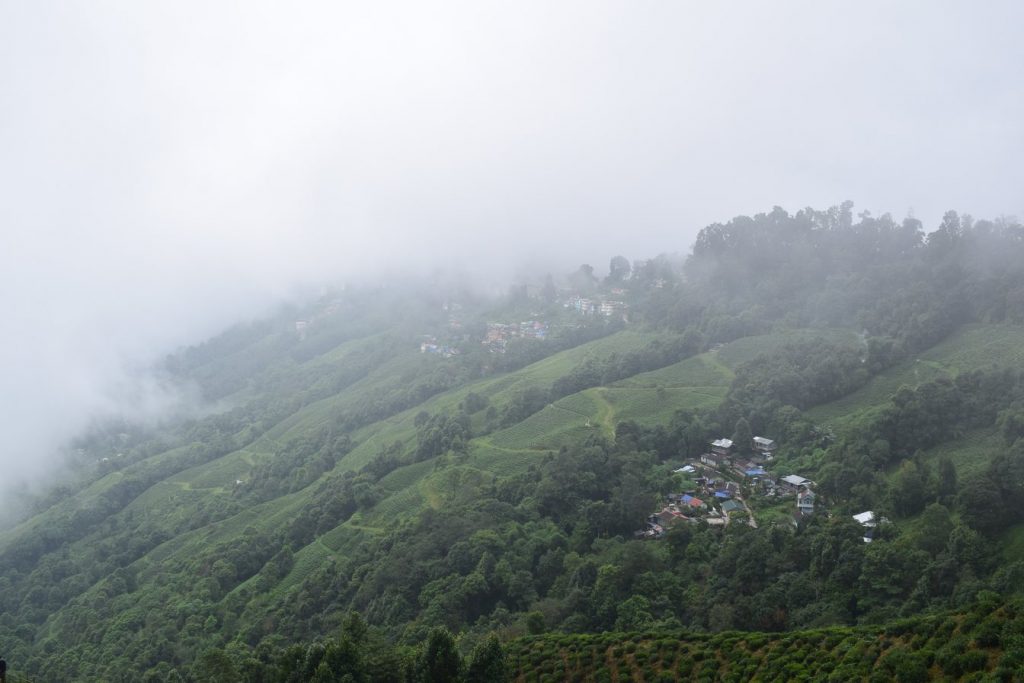
Darjeeling is fundamentally a tea town. Its identity was built around the tea bushes lining these Himalayan slopes, and stepping into a working tea estate is a central part of any visit. While dozens of tea gardens operate across the surrounding valleys, Happy Valley Tea Estate is the one within easy reach of the town centre.
A quick note before the detail below: opening hours, tour costs and operating status for Happy Valley were checked in September 2026 and can change; confirm current figures locally before you travel.
Happy Valley Tea Estate — history and location
Happy Valley Tea Estate holds a notable place in regional history as Darjeeling’s second-oldest tea estate. It was founded in 1854 as “Wilson Tea Estate”, named after Englishman David Wilson. In 1903, according to a secondary corroborating source, it was sold to Tarapada Banerjee, and renamed Happy Valley in 1929 after a merger with Windsor Tea Estate. The name it sells under is tightly defined: the Tea Board of India restricts “Darjeeling” to tea grown in 87 registered gardens inside a mapped area of the district.
The estate sits at an altitude of 2,100 metres (6,900 ft) above sea level, spread across steep mountain terraces. It is located approximately 3 km north of Darjeeling town, reached via Lochnagar Road from Chowk Bazaar.
Visiting hours, tours and cost
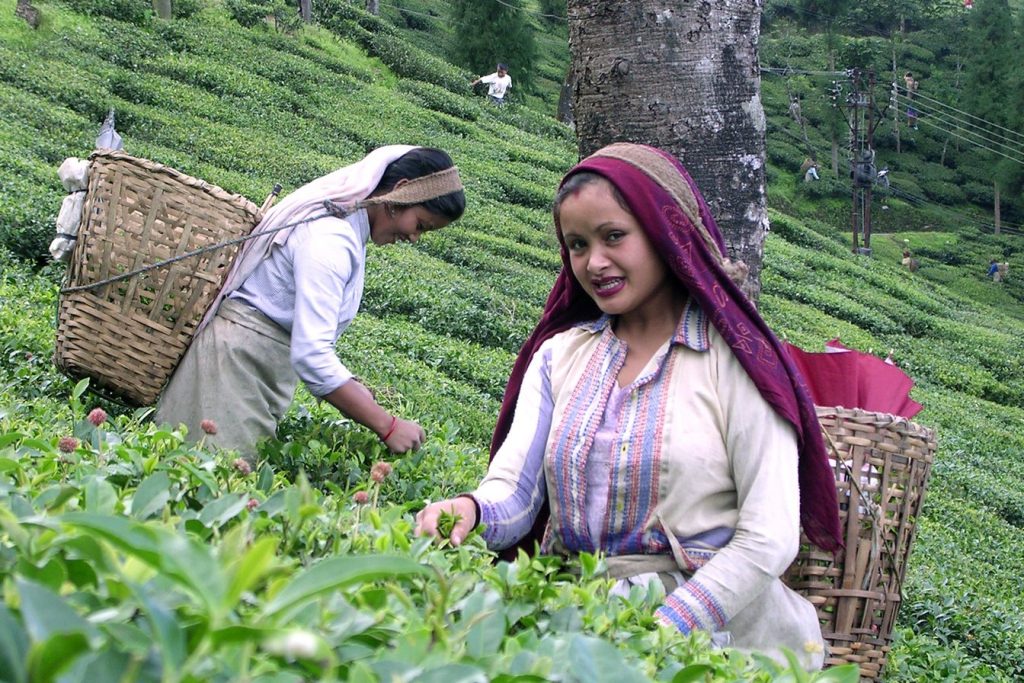
Planning a visit to Happy Valley requires verifying details locally, as published guides disagree. Hours vary by source: the official district tourism site states Tuesday to Saturday, 8:00 AM to 4:30 PM; Trawell.in records 8:00 AM to 4:00 PM, closed Sunday and Monday; Holidify and several travel blogs claim it is open all seven days, 9:00 AM to 4:30 PM. Most sources point to a six-day week with at least one day closed. Confirm hours by phone before visiting.
Tour and tasting costs are also inconsistent, with no single official price list found: figures range from free entry with roughly ₹50 for a guide, to ₹50–100 for a guided factory tour, to ₹200 per person. Pricing may also have shifted since a late-2022 change of ownership, when the estate passed from the Ambootia Group to Lemongrass Organic Tea Estates Pvt. Ltd.
Tours appear to run normally, with no reports of a current closure, though this could not be confirmed for 2026 — call ahead. The factory closes seasonally each year, roughly November through February; visitors in those months can view the grounds but will not see live processing.
Understanding Darjeeling tea flushes
Tea production in Darjeeling follows distinct seasonal cycles known as flushes, each marking a different stage in the bush’s growth through the year.
The earliest harvest produces Darjeeling first flush tea, plucked from late February to the end of April, taking the tender first shoots after winter dormancy.
The second flush follows, roughly May to June (sources vary a week or two either side), yielding the prized “muscatel” harvest picked just before the monsoon.
The monsoon flush runs roughly from July through September or October, through the monsoon rains, and is used mainly for commercial tea bags and iced-tea blends.
The autumn flush follows from October to November, after the monsoon ends around mid-September.
How Darjeeling’s tea gardens began
Camellia sinensis was first planted in the Darjeeling area in 1841 by Archibald Campbell, an East India Company official developing the hill station, according to published histories of the region. The first experimental gardens followed in 1852 at three sites — Tukvar, Steinthal and Alubari — with the first commercial gardens in 1856; by 1866 Darjeeling had 39 tea gardens.
Two named estates tell that early story in more concrete form. Makaibari’s own website markets it as “the world’s first tea factory”, established 1859. Better-sourced accounts give a more modest history: the garden was founded in 1852 by Captain Samler, an agent of the Darjeeling Tea Company, who sold it to Girish Chandra Banerjee; the factory commissioned there in 1859 was the first in Darjeeling district, not the world, and it closed in 1933. The Banerjee family ran the estate until the Luxmi Group bought it in 2014.
Margaret’s Hope was set up in the 1830s, became commercially viable in 1864 trading as “Bara Ringtong”, and only took its present name in the 1920s. The current factory was built by John Taylor in 1930; the estate is now owned by the Goodricke Group.
Darjeeling tea’s Geographical Indication status
Darjeeling tea GI status gives it statutory protection against misrepresentation in domestic and international markets. The Tea Board’s own site states that the DARJEELING word and logo were the first Geographical Indications ever registered in India, held in the Tea Board’s name under the Geographical Indications of Goods Act, 1999 — the Tea Board’s document gives 27 October 2003 as the registration date, though most sources say 2004.
The Tea Board defines Darjeeling Tea as tea grown in those same 87 registered gardens within the GI area — about 10 million kilograms a year, across 17,500 hectares, at 600 to 2,000 metres elevation. Protection extends beyond India: Darjeeling was registered as a Protected GI in the European Union on 20 October 2011, on an application filed 12 November 2007.
Where to stay near Happy Valley
For anyone visiting Happy Valley and exploring Darjeeling’s tea culture more broadly, staying centrally in town is convenient. Hotel Apsara is a pure vegetarian hotel at 6 Laden La Road, Chauk Bazaar, Darjeeling, West Bengal 734101, near the Head Post Office in Darjeeling Bazar.
Mall Road is about six minutes away on foot — 470 m by MakeMyTrip’s measurement. There is no verified distance from the hotel to Happy Valley itself; the estate sits about 3 km north of town, via Lochnagar Road from Chowk Bazaar.
On-site dining is provided by the hotel’s multi-cuisine vegetarian restaurant, serving Indian vegetarian food prepared by an Indian chef, with a kid’s menu available. Multilingual staff, speaking Bengali and English, can help you call ahead to confirm the estate’s opening hours before you set off.
The hotel offers six room types, with published indicative rates for rooms such as the Super Deluxe Room running from ₹3,723 to ₹6,585 per night — figures rather than a guarantee, so confirm on booking. Check-in is at 1:00 PM; published sources conflict on check-out time (11:30 AM or 12:00 PM), so confirm that too.
To explore Darjeeling’s tea culture with a reliable central base, Hotel Apsara is a straightforward option for your stay.