

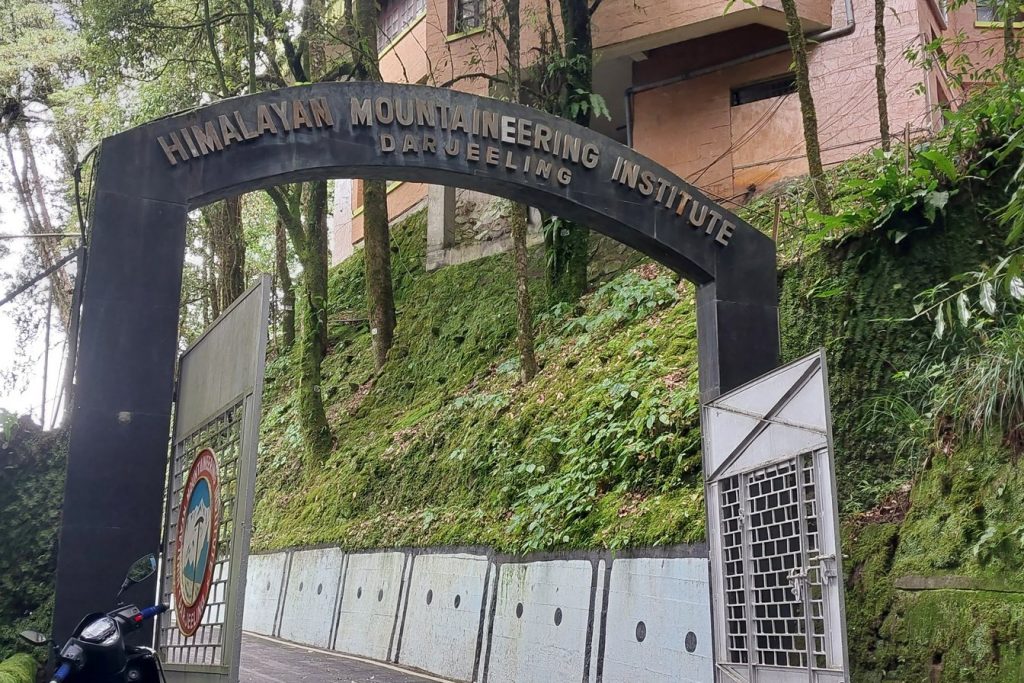
The Himalayan Mountaineering Institute and the Padmaja Naidu Himalayan Zoological Park share a hillside and a gate above Darjeeling town, and most people visit both in a single morning.
A quick note before the detail below: entry fees, opening hours and ticketing rules for this hilltop are unusually inconsistent across sources and were checked in September 2026. Confirm the current figures at the gate before you plan your morning around them.
The Himalayan Mountaineering Institute — history and the Everest connection
Tenzing Norgay and Edmund Hillary made the first ascent of Mount Everest on 29 May 1953. The following year, on 4 November 1954, the Himalayan Mountaineering Institute was founded on the initiative of Prime Minister Jawaharlal Nehru together with Dr Bidhan Chandra Roy, then Chief Minister of West Bengal.
The institute started life at Roy Villa, Lebong Cart Road — the house where Sister Nivedita, a disciple of Swami Vivekananda, spent her last days — before moving in 1958 to the western spur HMI’s own history calls Birch Hill, now addressed as Jawahar Parvat, Darjeeling.
Tenzing Norgay served as HMI’s Director of Field Training from June 1954 to May 1976, and then stayed on as Advisor until his death in May 1986.
The HMI museum
HMI’s own account describes one museum, established in 1957 and, by its own description, the oldest mountaineering museum in the country, in three sections: Mountaineering History, Mount Everest Expedition, and A Panorama of Himalayan Life. The Everest material is one section, not a separate building.
The single object worth knowing about is a Carl Zeiss telescope that Adolf Hitler presented to General Shamsher Jung Bahadur Rana, Commander-in-Chief of the Nepalese army, who in turn presented it to HMI on 7 July 1961. It remains on display in the museum today.
Around the grounds are Tenzing Rock and Gombu Rock, used for climbing practice. HMI’s first Principal, Major Narendra Dhar “Nandu” Jayal, held the post from June 1954 to March 1958, built the campus and base camp, and died on an expedition to Cho Oyu in 1959, often mis-dated to 1958. Nawang Gombu, an instructor from the institute’s founding, became the first person to climb Everest twice, with the American team in 1963 and the Indian team in 1965; he succeeded Tenzing as Director of Field Training in May 1976 and stayed Honorary Advisor until his death in 2011. The campus also holds the Tenzing Sherpa Samadhi, a stupa to Gombu, and the Jayal Auditorium.
HMI is run jointly by the Government of India and the Government of West Bengal, with an Executive Council headed by India’s Defence Minister.
Padmaja Naidu Himalayan Zoological Park — the conservation work
The zoo was established on 14 August 1958 as the Himalayan Zoological Park. In 1975 Indira Gandhi dedicated it to the memory of Padmaja Naidu, daughter of Sarojini Naidu and a former Governor of West Bengal, giving it its present name. The zoo’s own material describes it as the largest high-altitude zoo in India.
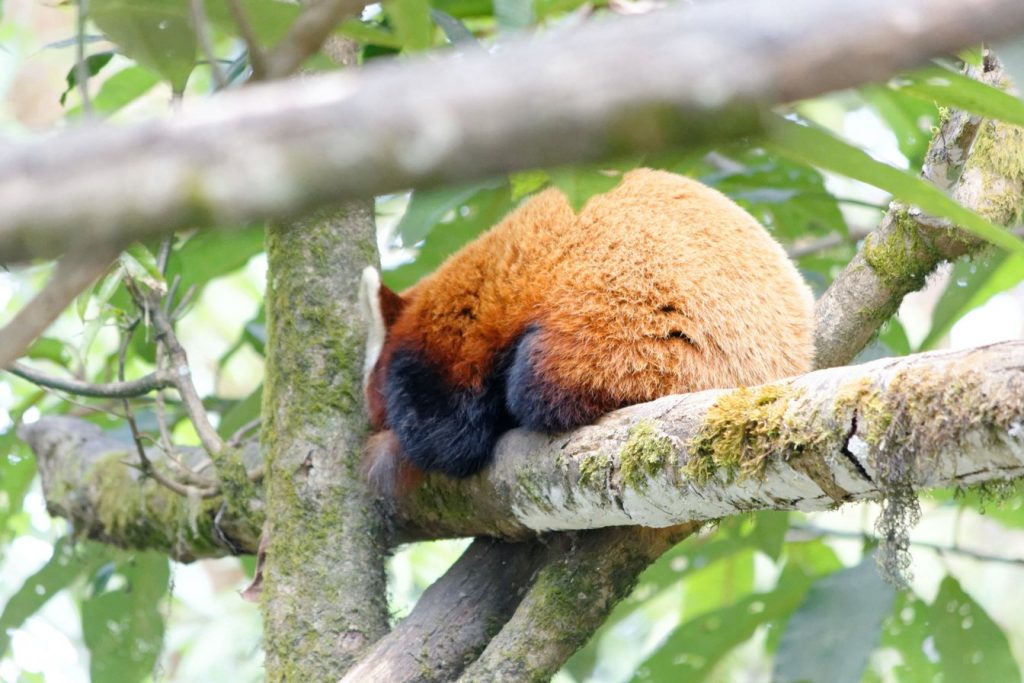
Its best-known programme is the red panda breeding project, begun in 1990. The first successful planned breeding came on 20 June 1994, and new founder stock — two males and one female — arrived from zoos in Rotterdam, Cologne and Madrid on 10 November 1994 to broaden the gene pool. Since then, between 2022 and 2024, nine captive-bred red pandas have been released into Singalila National Park.
A Tibetan wolf programme also began in 1990, when the first pair, Hira and Moti, arrived from Shimla Zoo; the zoo described itself at the time as the only zoo in the world then breeding Tibetan wolves. By 2003 the population had reached 32, and breeding pairs went on to Nainital, Gangtok and Shimla zoos.
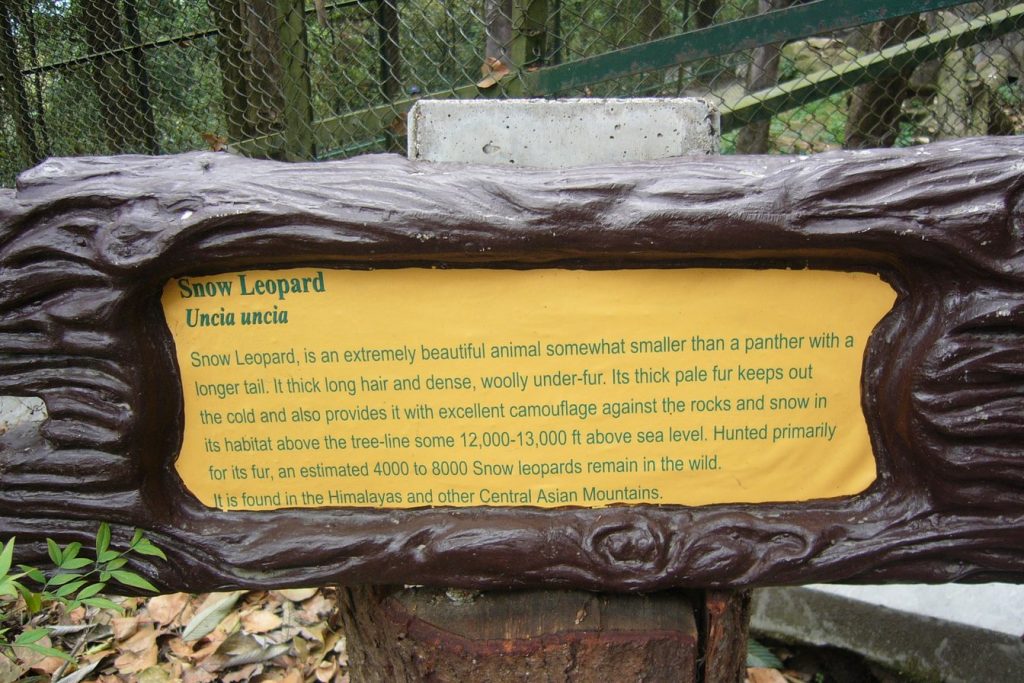
Snow leopard conservation follows a similar arc: ex-situ breeding began in 1986, with the first planned success in 1989 producing two female cubs. Press coverage citing the World Association of Zoos and Aquariums describes the park as holding the largest captive population of snow leopards in the world and credits it with over three decades of successful breeding — treat the “largest in the world” claim as reported rather than confirmed. A 2023–2024 season produced four red panda cubs and two snow leopard cubs.
On a clear day the zoo also gives a view towards Kangchenjunga, the world’s third-highest mountain at 8,586 metres, a reminder of the terrain a Darjeeling zoo red panda or snow leopard would naturally live in.
Tickets, hours and the closed day
One thing every source agrees on: Thursday is the weekly closed day, without exception.
Hours are less settled: most sources give 8:30 AM to 4:00 PM daily, one gives 8:30 AM to 4:30 PM, and the museum building is listed separately as 9:30 AM to 4:00 PM — slightly different hours from the grounds around it.
Whether one ticket covers both zoo and HMI is unclear. Most sources describe a single combined ticket, though one aggregator lists an explicit “HMI zoo combined ticket” at ₹110 (domestic) and ₹180 (foreign) as distinct from a zoo-only fee. Prices themselves vary — ₹110/₹180 from the zoo’s own site against a lower ₹60/₹100 tariff from other 2025 tourism sources, with smaller charges for children, students and cameras. Ask at the gate, and carry small notes.
The North Point ropeway
A passenger ropeway runs from North Point, on the same side of town as this hillside, and is often added to the same morning. It began running in 1968 as a single-car service, expanded to 16 cars in 1988. On 19 October 2003 three cabins fell from the cable, killing four tourists and injuring eleven others; it stayed closed for more than eight years before reopening on 2 February 2012. Current operating status could not be verified, so check locally before relying on it.
Where to stay for an HMI and zoo morning
Hotel Apsara is a pure vegetarian hotel at 6 Laden La Road, Chauk Bazaar, Darjeeling 734101, near the Head Post Office in Darjeeling Bazar, and about 470 m from Mall Road, a six-minute walk on MakeMyTrip’s own measurement.
The hotel’s multi-cuisine vegetarian restaurant is worth using before you set off, since there is nothing to eat once you are up on the hillside — Indian vegetarian food, an Indian chef, and a kid’s menu for families. The lift is a small relief for tired legs after a morning walking between enclosures.
Check-in is at 1:00 PM; check-out is not settled across sources (11:30 AM and 12:00 PM both appear), so confirm when you book. Three to a room, the Deluxe Double Room with Extra Bed is one of six types; published rates run ₹3,723 to ₹6,585 a night, indicative rather than fixed.
For a straightforward, central base for an HMI and zoo morning, Hotel Apsara is a short walk from Mall Road and a reasonable stop for lunch before or after.