

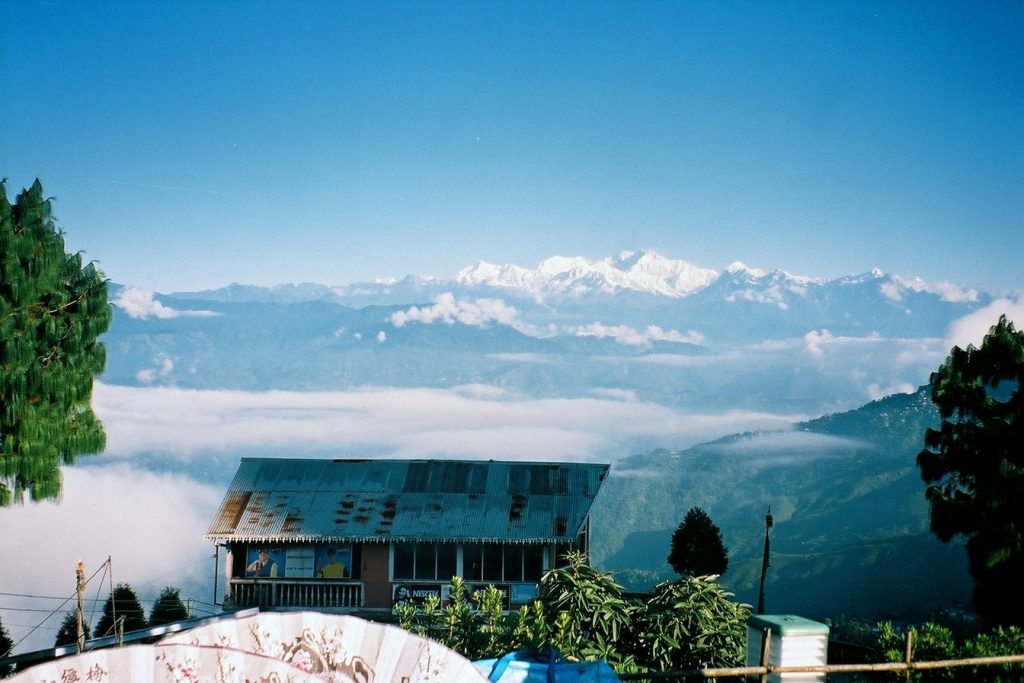
Best Time to Visit Darjeeling, Month by Month
Selecting the best time to visit Darjeeling depends on what you prioritise: clear mountain views, comfortable walking temperatures, or fewer crowds and lower rates. The town sees significant seasonal shifts in precipitation and temperature. Darjeeling receives an annual rainfall total of approximately 2,373.3mm, with about 80% of it falling during the four monsoon months of June to September.
The annual travel cycle divides into distinct seasons:
- Peak season: Roughly October, marked by post-monsoon clarity, autumn festivals, high visitor numbers, and the highest room rates.
- Shoulder season: Late September, November, and early April, which combine favourable weather with moderate accommodation costs.
- Low season: July and August, coinciding with the full monsoon, bringing the lowest accommodation prices alongside the poorest mountain visibility.
- Secondary travel windows: March to early April for the spring bloom, and mid-December through February for winter conditions and tracking cold weather.
Visibility estimates and pricing patterns below were checked in September 2026 and can shift from year to year — treat them as general guidance rather than a guarantee.
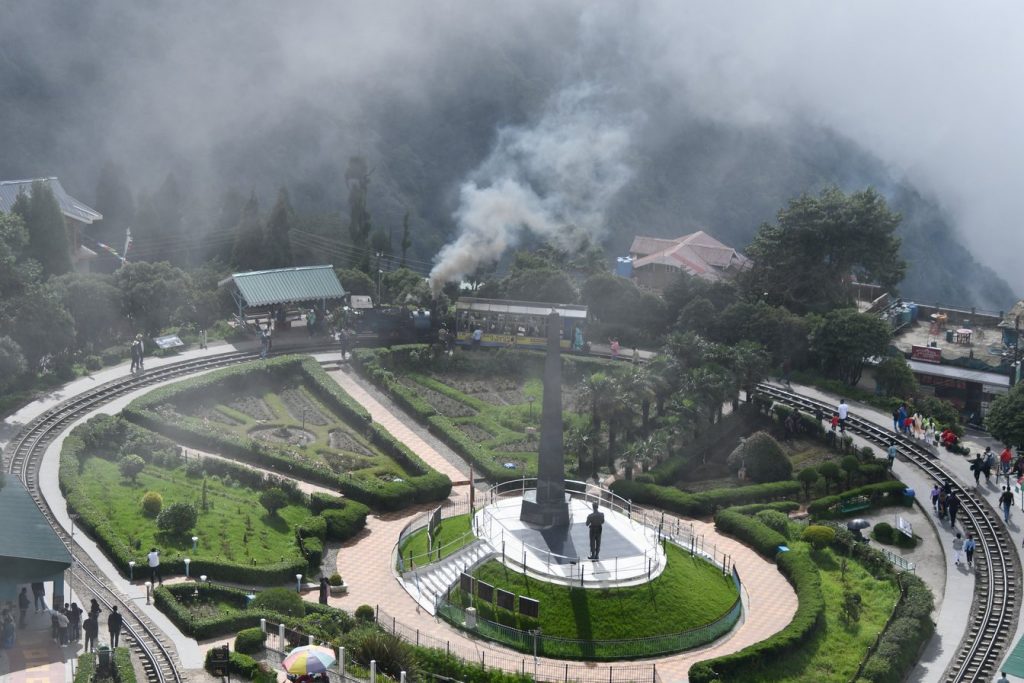
Darjeeling Weather by Month
The table below lists India Meteorological Department (IMD) climate normals (1991–2020) for Darjeeling’s monthly mean daily maximum and minimum temperatures, rainfall, and average rainy days.
| Month | Mean Daily Max Temp (°C) | Mean Daily Min Temp (°C) | Rainfall (mm) | Rainy Days |
|---|---|---|---|---|
| January | 11.1 | 1.7 | 10.8 | 0.9 |
| February | 12.4 | 3.1 | 11.4 | 1.2 |
| March | 15.9 | 6.0 | 26.4 | 2.6 |
| April | 18.6 | 9.0 | 89.0 | 6.7 |
| May | 19.3 | 10.8 | 160.0 | 10.2 |
| June | 19.8 | 12.8 | 419.0 | 17.9 |
| July | 19.5 | 13.4 | 648.0 | 23.4 |
| August | 19.9 | 13.5 | 530.0 | 22.0 |
| September | 19.5 | 12.7 | 385.0 | 16.0 |
| October | 19.4 | 9.9 | 78.8 | 3.9 |
| November | 17.2 | 6.2 | 11.2 | 0.6 |
| December | 13.7 | 3.5 | 2.8 | 0.7 |
IMD’s record extremes for the Darjeeling station stand at an all-time high of 28.5°C, recorded in August, and an all-time low of -7.2°C, recorded in January.
Autumn (October to November): Clear Skies and Peak Season
Autumn brings the clearest air and the most reliable mountain panoramas of the year, making it the most popular time to visit the region.
Darjeeling in October
October marks the beginning of peak season. The mean daily maximum reaches 19.4°C, the minimum 9.9°C, and rainfall drops sharply to 78.8mm over 3.9 days as the monsoon clears. The month also coincides with the Dashain season’s Fulpati and lakhe dances, per the district’s own festival calendar, and hotel tariffs reach their highest levels of the year.
November Weather and Horizon Clarity
November functions as a shoulder season month. The mean maximum drops to 17.2°C, nights cool to 6.2°C, and rainfall is minimal at 11.2mm across 0.6 days. The month also brings Bhai Tika, the Tihar-season sibling ceremony on the district’s festival calendar, and the Darjeeling Carnival — founded by a youth group, the Darjeeling Initiative, to help the town move on from the violent Gorkhaland agitation of the late 1980s, and already running by 2003.
For mountain visibility, late October through mid-December is the most reliable window. Tiger Hill and other vantage points offer roughly a 75–80% chance of clear morning Kanchenjunga views in this period, an informal travel-industry estimate rather than a measured statistic.
Autumn Packing Guidance
Pack layered clothing: light shirts for mild, sunny afternoons, with warm sweaters or a jacket for chilly mornings and evenings.
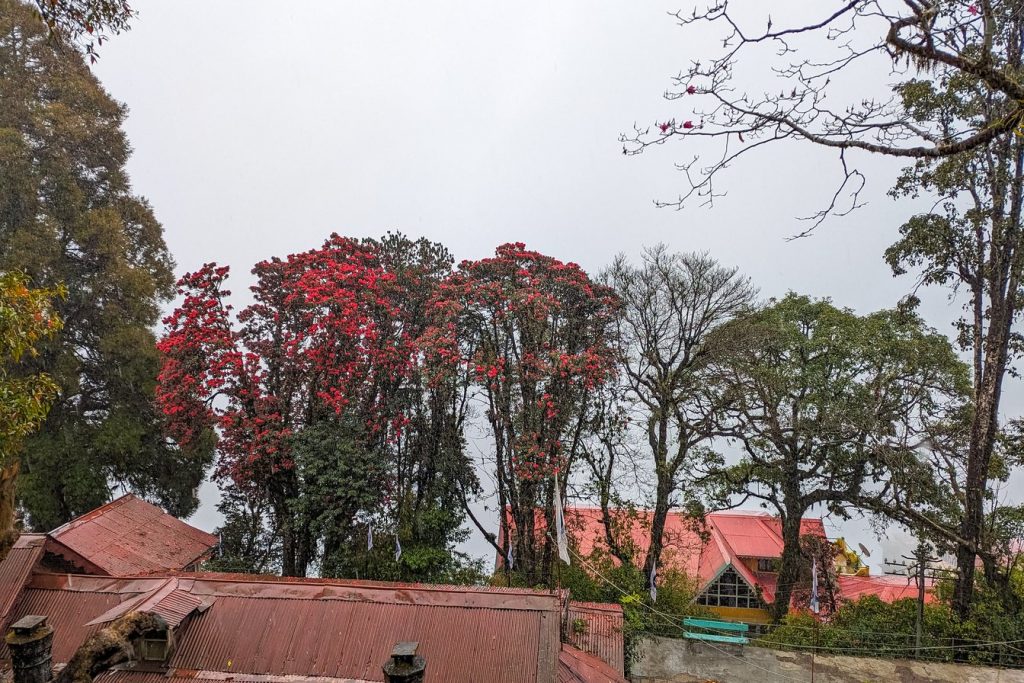
Winter (December to February): Cold Mornings and Crisp Horizons
Winter brings lower visitor volumes outside the holiday period, brisk conditions, and open mountain views.
December records a mean maximum of 13.7°C, a minimum of 3.5°C, and just 2.8mm of rain across 0.7 days. January is the coldest month, with a mean maximum of 11.1°C, a minimum of 1.7°C and 10.8mm of rain; it also brings Maghey Sakranti, marked across the district in January. February sees modest warming: a mean maximum of 12.4°C, a minimum of 3.1°C, and 11.4mm of rain.
Mid-December through February is a secondary tourist window, with very clear morning Kanchenjunga views, though travellers should prepare for persistent cold. Losar, the Tibetan New Year, generally falls in February or March and runs about a fortnight, with dates varying by community.
Snowfall in Town: When Does It Snow in Darjeeling
Travellers often ask when does it snow in Darjeeling. Snow in town itself is rare, occurring at most a few times a decade (roughly once every 2 to 5 years across varying estimates), almost always between December and February, with late January to early February the likeliest window. Heavy snow is far more common at higher points nearby, such as Sandakphu, than in Darjeeling town itself.
Winter Packing Guidance
Winter needs heavy woollens, thermal layers and an insulated jacket, plus warm gloves, thick socks and a woollen cap for mornings that approach freezing.
Spring (March to May): Warmer Days and Pre-Monsoon Haze
Spring brings longer daylight hours, warmer afternoon weather, and increasing pre-monsoon precipitation.
March records a mean maximum of 15.9°C, a minimum of 6.0°C, and 26.4mm of rain across 2.6 days — a secondary window for the spring bloom. Early April is also shoulder season, with moderate prices before rainfall increases; its mean maximum reaches 18.6°C, minimum 9.0°C, rainfall 89mm over 6.7 days.
By May, the mean maximum rises to 19.3°C and the minimum to 10.8°C, while rainfall reaches 160mm over 10.2 days; the month also brings Buddha Jayanti, marked with a public procession through Chowrasta. Kanchenjunga visibility becomes less reliable in April and May as pre-monsoon haze builds in the valleys below the peaks.
Much of the region’s spring colour comes from Singalila National Park on the Singalila Ridge (2,300–4,000 m, 78.6 sq km), a wildlife sanctuary from 1986 and a national park since 1992. Sandakphu (3,630 m) and Phalut (3,600 m) inside it are West Bengal’s two highest peaks, and the park blooms twice: rhododendrons in March and April, and a post-monsoon flush around October.
Spring Packing Guidance
Spring needs the same layering as autumn: light clothes for sunny midday walks, with a fleece or woollen jumper for cool mornings and evenings.
Monsoon (June to September): Heavy Rains and Quiet Streets
Darjeeling in Monsoon
Travelling to Darjeeling in monsoon requires realistic planning regarding mountain viewing. June records a mean maximum of 19.8°C, a minimum of 12.8°C, and 419mm of rain across 17.9 days — a rainfall jump of roughly 2.6 times May’s total. July is the wettest month of the year: 648mm of rain across 23.4 days, temperatures averaging 19.5°C to 13.4°C. August stays heavily soaked: a mean maximum of 19.9°C, a minimum of 13.5°C, and 530mm of rain over 22 days. September sees 385mm across 16 days, temperatures 19.5°C down to 12.7°C.
July and August are the low season: Kanchenjunga visibility drops sharply from June through August under heavy cloud cover, but the off-peak period brings the cheapest hotel tariffs and quiet streets. Late September is a shoulder transition as the monsoon recedes.
The monsoon has also produced the region’s worst weather disasters: in 1968 a rainstorm cut the 56 km Darjeeling–Siliguri road in 92 places, and the Teesta, the region’s main river, had major floods in both 1950 and 1968. The magnitude-6.9 Sikkim earthquake of 18 September 2011 also disrupted power in the district’s Kalimpong subdivision, with relief camps set up in Darjeeling town.
Monsoon Packing Guidance
Pack waterproof jackets, a sturdy umbrella and grippy footwear for slippery roads, plus breathable, quick-drying fabrics for the humidity.
Planning Your Base in Darjeeling
An accessible base makes a noticeable difference to your daily schedule; lodging near central transport points, when exploring Darjeeling, helps you coordinate early travel and town walks.
Hotel Apsara, a pure vegetarian hotel at 6 Laden La Road, Chauk Bazaar, Darjeeling 734101, near the Head Post Office, is a few minutes’ walk from Mall Road. Its 24-hour reception matters most for this question: monsoon delays regularly push arrivals from the plains past midnight, and a staffed desk removes one worry from a day that already has weather in it.
There are six room types, with the hotel’s own published indicative rates running from ₹3,723 to ₹6,585 a night — published figures rather than a guaranteed tariff, so confirm at booking. For three travellers, the Superior Double Room with Extra Bed tops that range; the full list of rooms shows what else is available. The FAQ page covers check-in, ID requirements and the rest.