



Discover Darjeeling
A working guide to the town and the hills around it, from a hotel in the middle of it.
Hotel Apsara stands on Laden La Road, in the middle of Darjeeling town rather than out on its edge. That matters more here than it does in most places: Darjeeling is built down the side of a ridge, the streets climb, and a hotel twenty minutes further out is twenty uphill minutes further out. From our door the railway station is about an eight-minute walk, the bus stand the same, and Mall Road roughly six minutes on foot.
What follows is a working guide to the town and the hills around it — what is genuinely worth your time, how far it is from us, and a few things about these places that are true and not widely repeated. Our reception can arrange a private taxi for any of the longer trips; please ask the evening before rather than on the morning, because cars in the hills need notice.
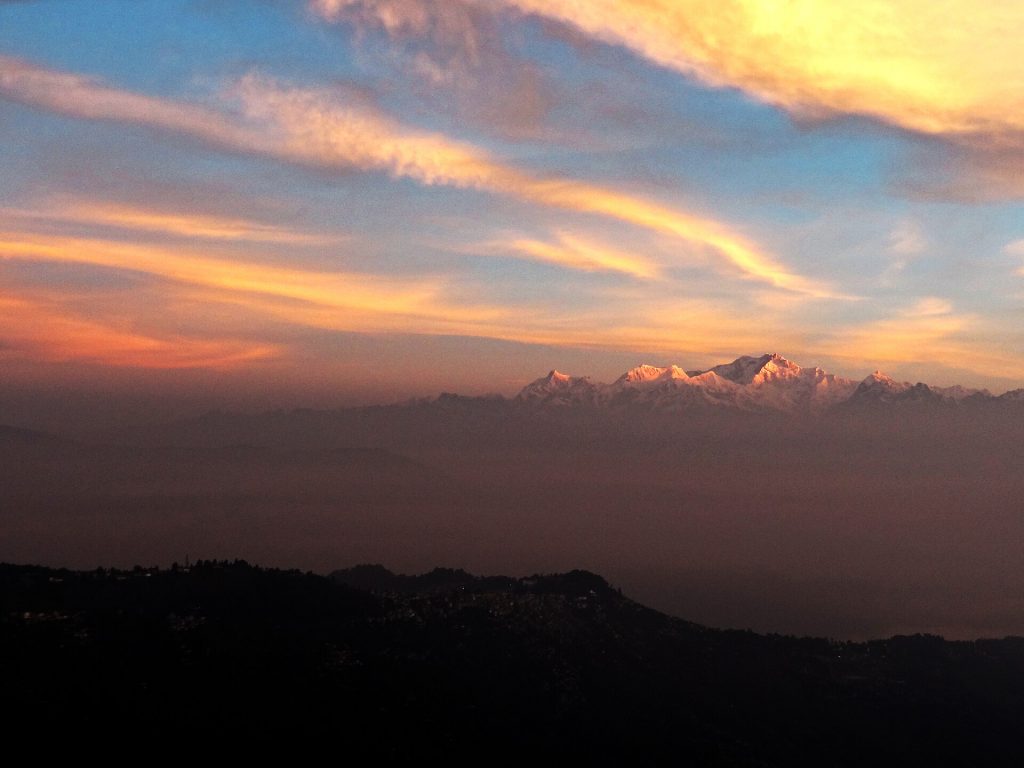
Tiger Hill — the reason people set an alarm for four in the morning
13.4 km from the hotel · by taxi · pre-dawn departure
You leave in the dark, you queue with several hundred other people, and you stand in the cold for forty minutes. Then, if the sky is clear, the light reaches Kanchenjunga before it reaches anything else and the whole eastern wall of the Himalaya turns for a few minutes the colour of a blood orange. On a very clear morning Everest is visible far to the west, small and unremarkable next to the mountain in front of you.
Two honest warnings. First, the summit is 13.4 km from us by road and the last stretch is slow; allow more time than seems reasonable. Second, the mountain is not visible every morning, and no hotel, guide or taxi driver can change that. Monsoon mornings are usually a wall of cloud. October to early December and March to April give you the best odds. If it is overcast when you wake, we would rather tell you to go back to bed than take your money for a car.
Kanchenjunga at sunrise, seen from Tiger Hill. Photograph by K94t, licensed CC BY-SA 4.0, via Wikimedia Commons.
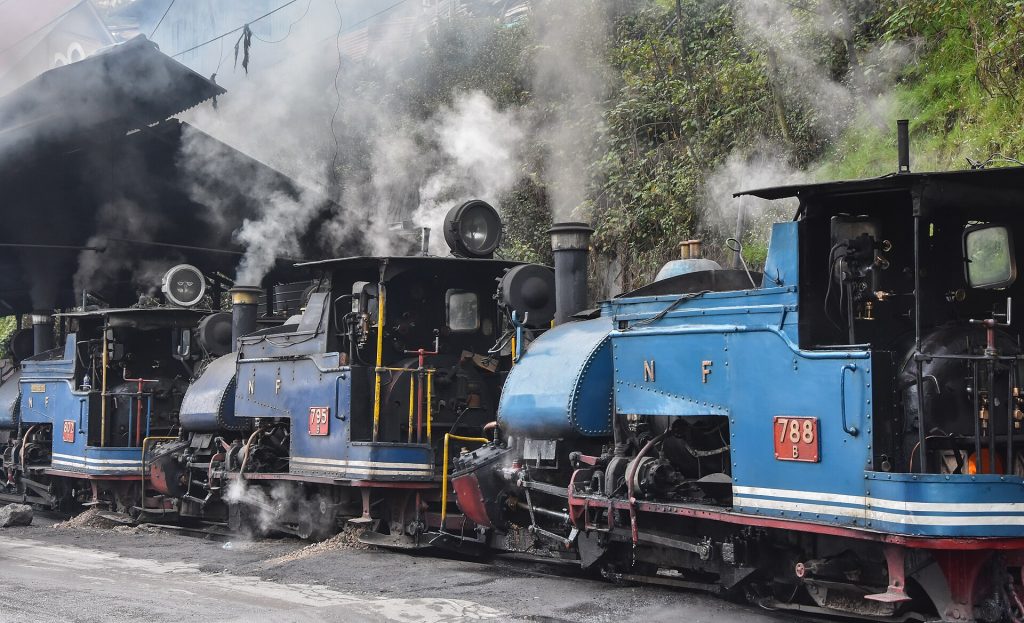
The Darjeeling Himalayan Railway
Darjeeling station: about 8 minutes on foot
The two-foot-gauge line that climbs from the plains to Darjeeling is a UNESCO World Heritage Site and still runs steam. The station is close enough to walk to from the hotel, and the short joy-ride service to Ghum and back is the trip most visitors take.
Mark Twain rode this line in February 1896 and wrote about it the following year in Following the Equator — including a thirty-five-mile descent on a hand-car, which he enjoyed considerably more than was sensible. The railway he described is, in its essentials, the railway you can still board a ten-minute walk from our reception.
Darjeeling Himalayan Railway steam locomotives. Photograph by Syed Sajidul Islam, licensed CC BY-SA 4.0, via Wikimedia Commons.
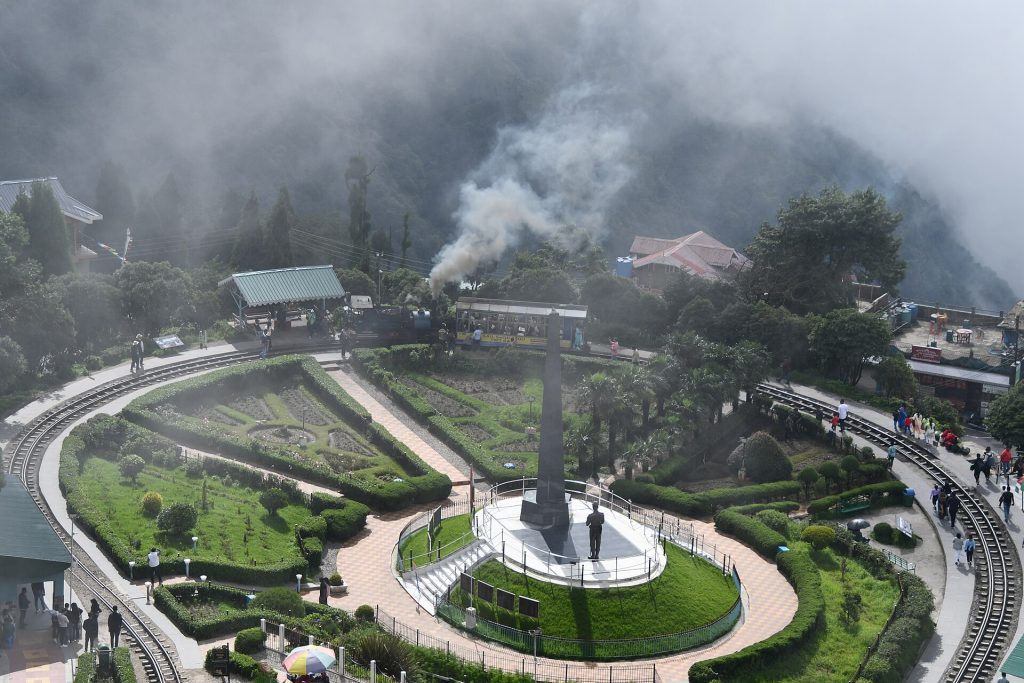
Batasia Loop
4.4 km from the hotel
A spiral of track laid to let the railway lose height it could not otherwise lose, wrapped around a landscaped garden and the Gorkha war memorial. The train enters, turns a full circle over itself, and leaves lower than it arrived. On a clear day the Kanchenjunga range stands directly behind it, which is why this is the most photographed hundred metres of railway in India.
Go early. By mid-morning the garden is full, and the light on the mountains has gone flat.
Batasia Loop. Photograph by DEB ANUTOSH, licensed CC BY 2.0, via Wikimedia Commons.
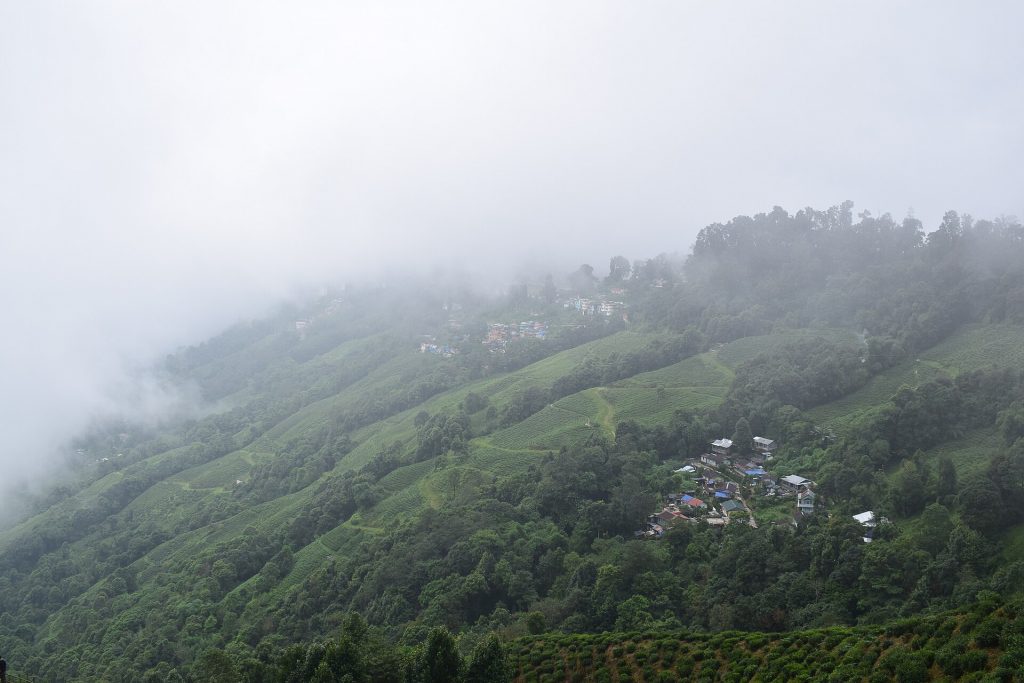
The tea
Happy Valley Tea Estate · a short taxi ride below the town
Darjeeling is one of the few names in tea that is protected by law. The Tea Board of India restricts the use of the word to 87 registered gardens in this district, and the Darjeeling word and logo were India's first registered Geographical Indication — the same kind of protection that Champagne has. Roughly ten million kilograms are produced each year, across about 17,500 hectares, between 600 and 2,000 metres of altitude.
Happy Valley, on the slope below the town, is the estate most visitors walk through, and the easiest to reach from here. Whether a garden is running depends on the plucking season and the weather; ask at reception before you set out, so that you are not standing at a closed gate.
Happy Valley Tea Estate. Photograph by Mr. Debapriya Hore, licensed CC BY-SA 4.0, via Wikimedia Commons.
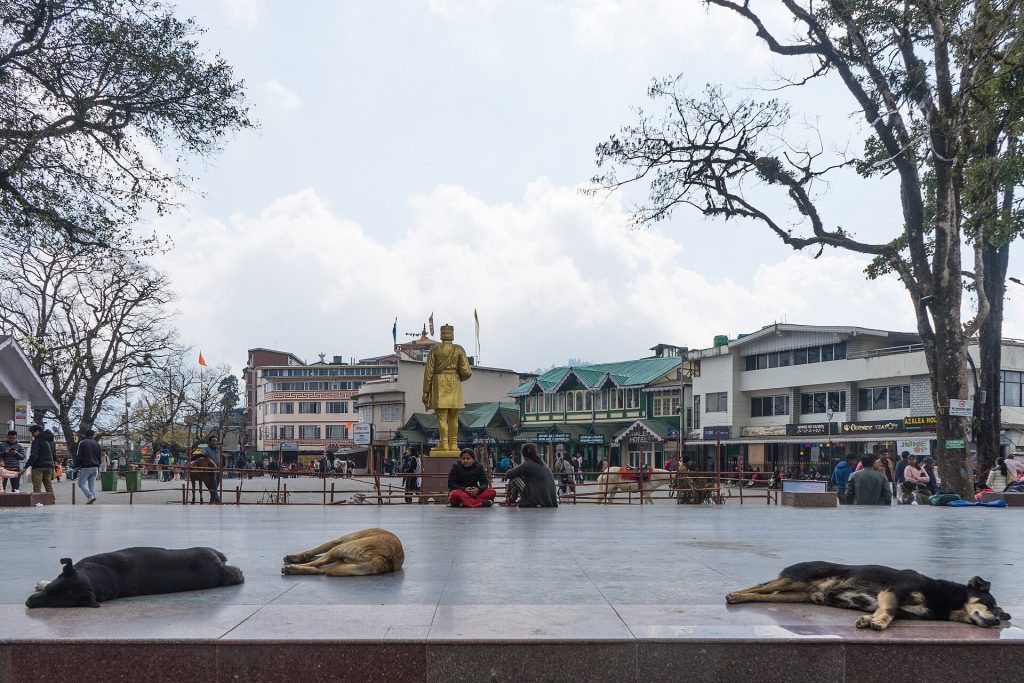
Chowrasta
At the top of the Mall · about 6 minutes' walk
The flat open square at the head of Mall Road, where the town comes to sit down. There are benches, bookshops, ponies for the children, and a statue of the Nepali poet Bhanubhakta Acharya, who rendered the Ramayana into Nepali verse — not word for word from the Sanskrit, but absorbed and retold, which is the harder thing to do.
Chowrasta is the one part of Darjeeling that is genuinely flat, and after a day of climbing streets you will understand why that is worth mentioning.
Chowrasta, Darjeeling. Photograph by Alexkom000, licensed CC BY 4.0, via Wikimedia Commons.
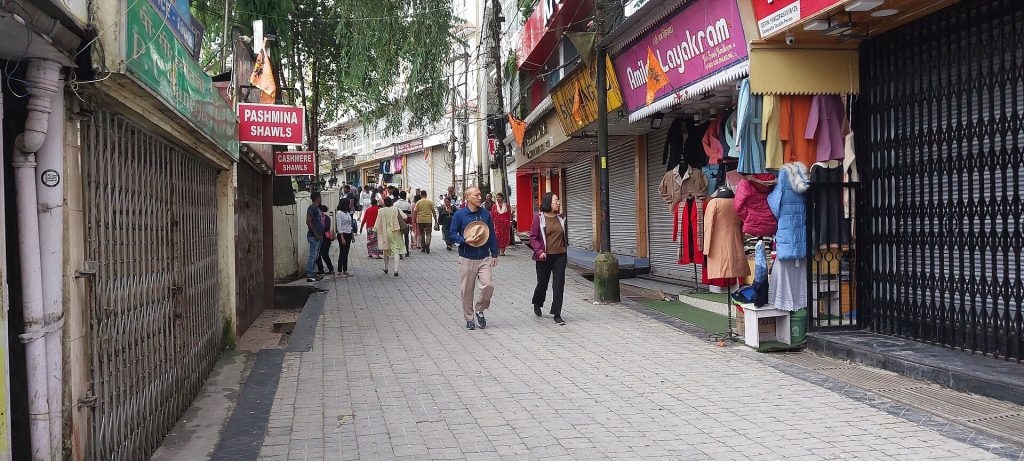
Mall Road and the markets
Mall Road: about 6 minutes on foot
Mall Road is the shopping and strolling spine of the town, closed to most traffic and lined with shops selling tea, woollens and curios. It runs a few minutes from our door. Keventer's, the rooftop institution, is about a three-minute walk from the hotel.
For the town as it actually works rather than as it presents itself to visitors, go down to Chowk Bazar, the market in the lower town — vegetables, spices, fabric, hardware, noise, and prices that have not been adjusted for tourists.
Mall Road, Darjeeling. Photograph by Pinakpani, licensed CC BY-SA 4.0, via Wikimedia Commons.
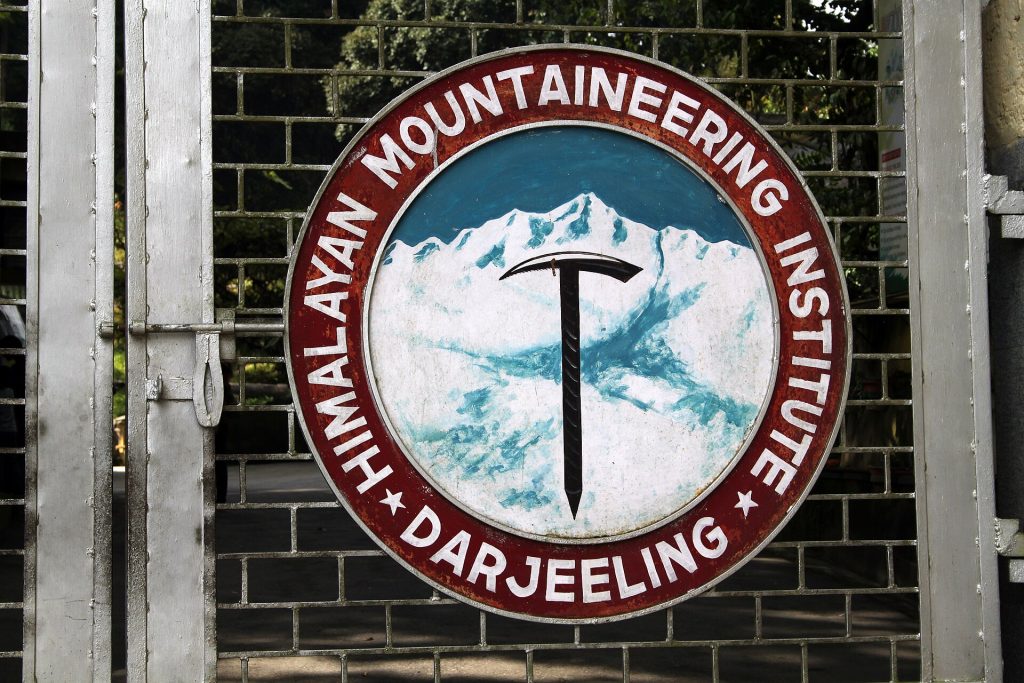
The Himalayan Mountaineering Institute
On Jawahar Parvat, above the town
Founded after the 1953 ascent of Everest and run for years by Tenzing Norgay, HMI is the place where Indian climbers are trained, and it keeps a museum established in 1957 whose Mount Everest section holds equipment from the early expeditions.
Its oddest exhibit is a Carl Zeiss telescope that was given by Adolf Hitler to General Shamsher Jung Bahadur Rana, Commander-in-Chief of the Nepalese army, and presented by him to the institute on 7 July 1961. It is still there, still pointed at the mountains, with a history most visitors walk straight past.
The Padmaja Naidu Himalayan Zoological Park shares the same site and the same ticket.
Himalayan Mountaineering Institute. Photograph by flowcomm, licensed CC BY 2.0, via Wikimedia Commons.
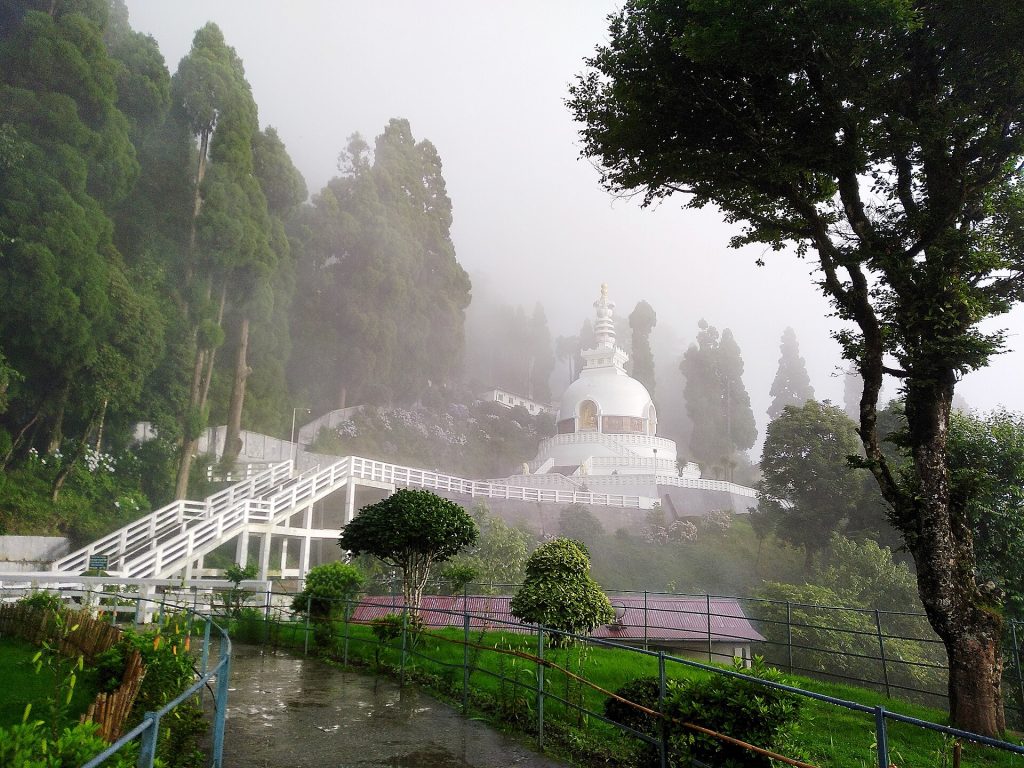
The Japanese Temple and Peace Pagoda
2.4 km from the hotel
A white stupa on a wooded spur above the town, with a Nipponzan-Myōhōji temple beside it. The foundation stone was laid in 1972 and the pagoda was inaugurated in 1992. The drumming at the morning and evening prayers is open to anyone who turns up, and visitors are welcome to join.
Of everything on this page, this is the place guests most often say they had not planned to visit and were glad they did.
Japanese Peace Pagoda. Photograph by JyotiPN, licensed CC BY-SA 4.0, via Wikimedia Commons.
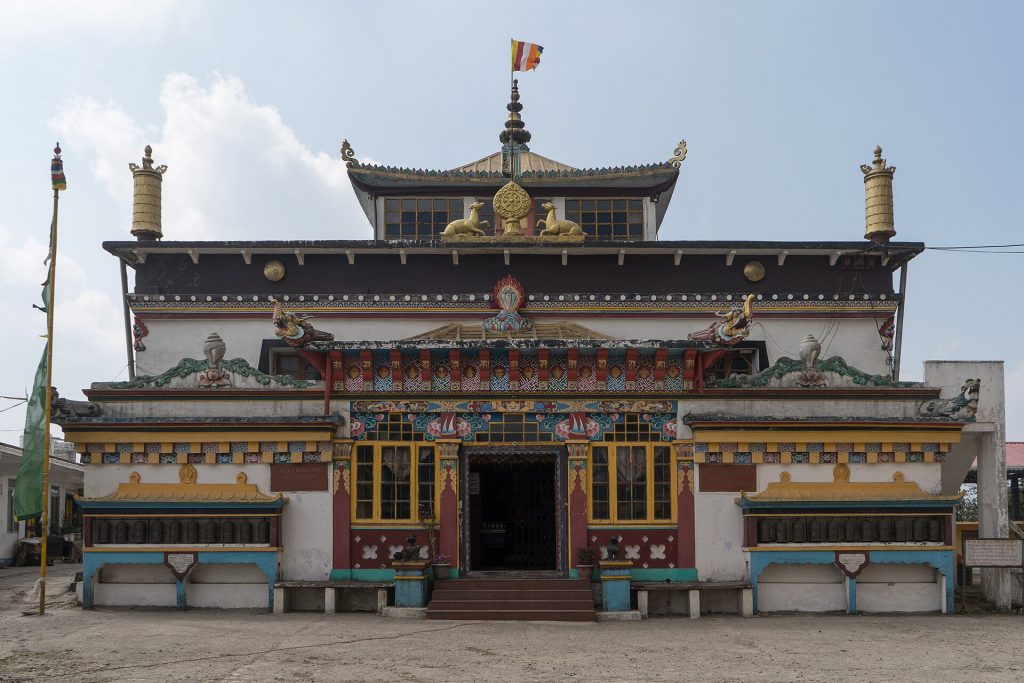
Ghum Monastery (Yiga Choeling)
Ghum is 7.3 km from the hotel · the toy train stops there
The oldest Tibetan Buddhist monastery in the area, founded in 1850 by the Mongolian monk Sokpo Sherab Gyatso, who led it until 1905. It belongs to the Gelukpa order, and the image inside is a fifteen-foot clay Maitreya — the Buddha who is yet to come — brought from Tibet.
Ghum is the turning point of the toy-train joy ride, so the monastery combines neatly with the railway rather than needing a trip of its own.
Yiga Choeling Monastery, Ghum. Photograph by Alexkom000, licensed CC BY 4.0, via Wikimedia Commons.
Getting here, and a word about the road
Darjeeling is reached by road from the plains, and the road is the weather's to keep or to close. This is not a modern anxiety: in 1968 a single catastrophic rainstorm cut the 56-kilometre Darjeeling–Siliguri road in 92 separate places. Landslides still close sections during the monsoon, and a local shutdown can stop traffic at any season. Build slack into the day you travel, and do not plan to catch a same-day flight or train out of the plains on a monsoon morning.
From the hotel, the Darjeeling railway station and the main bus stand are each about an eight-minute walk. We have deliberately not printed a distance to Bagdogra airport on this page: published figures for it range from 40 to 71 kilometres and no two sources agree, so telephone us and we will tell you what the drive actually takes on the day you are travelling. Reception can arrange a paid private taxi for airport and railway transfers, and for any of the excursions above.
When to come
Mountain views are most reliable from October to early December and again from March to April. The monsoon, roughly June to September, is green, quiet, cheap and frequently invisible. Winter is cold and clear; bring more than you think you need, because the rooms are not air-conditioned and they do not need to be.
Coming back at the end of the day
Whatever you have been up to, dinner at the hotel is pure vegetarian, cooked in our own kitchen, and served until 10:00 PM. See our restaurant page for what that involves.
Every landmark photograph on this page is a real photograph of the place named, taken by the credited photographer and used under the Creative Commons licence linked beside it. The images have been resized for the web; no other changes were made. None of them is a photograph of the hotel.